The Organic Lady Thoughtful Bedding
Wool Comforters Across Seasons: Choosing the Right Weight and Care Routine
A well-chosen comforter is less about chasing a single ideal weight than finding the balance that feels right in your room, beneath your sheets, and through the seasons. Wool’s natural character makes that balance especially interesting: breathable and resilient, it can offer warmth without the heavy, sealed-in feeling some sleepers dislike.
Published October 22, 2026
There is a particular pleasure in climbing into a bed that feels considered. The sheets are cool, the pillows settle into place, and the top layer rests with just enough substance to make the room feel like a retreat. A comforter contributes more than warmth to that scene. Its weight, construction, cover fabric, and care needs all shape the experience of sleeping under it.
Wool comforters are often chosen for their combination of softness, loft, and temperature regulation. Yet “wool” does not describe one uniform sensation. A lightweight wool comforter can feel airy and quietly insulating, while a denser or more generously filled design may feel substantial and cocooning. The right choice depends on more than the season on the calendar. Bedroom temperature, bedding layers, climate, and personal preference deserve equal attention.
Understanding those details makes shopping less mysterious—and caring for a wool comforter more straightforward. Instead of expecting it to behave like a standard machine-washable duvet, think of wool as a natural filling that benefits from protection, fresh air, and deliberate cleaning. A thoughtful routine can help maintain its loft and extend its useful life.
What comforter weight really means
In bedding, weight can refer to the physical heaviness of a comforter, the amount of filling used, or the impression it creates when draped over the body. These ideas overlap, but they are not interchangeable. A comforter may be relatively light to lift and still provide welcome warmth because of the insulating qualities of its fill and the way it is constructed. Conversely, a more substantial comforter may appeal to someone who enjoys the grounded feeling of a heavier layer.
Wool fibers are naturally springy and form a lofted structure that can hold still air. That structure helps insulate, while wool’s ability to take up and release moisture vapor can contribute to a comfortable sleep environment. These qualities do not make every wool comforter equally warm, nor do they promise a particular temperature for every sleeper. Fill quantity, quilting, shell fabric, room conditions, pajamas, and the rest of the bed all play a part.
When comparing options, look for the maker’s description of intended use, fill amount or density where provided, and any guidance about climate or sleep style. Labels such as “lightweight” and “all-season” are useful starting points, not universal standards. If a product listing gives a fill weight, treat it as a point of comparison within that maker’s range rather than a complete measure of how warm it will feel at home.
Begin with the sleeper, not the season
Seasonal shopping can be tempting: a lighter comforter for summer, a heavier one for winter. But many bedrooms do not follow the weather outside. Central heating, open windows, building insulation, humidity, and the direction a room faces can make an indoor environment feel quite different from the forecast. Personal physiology matters too. A sleeper who tends to feel warm may want a different layer from someone who is often cold, even when both share the same room.
Before choosing, notice what is already happening overnight. Do you wake up warm and push away the duvet? Are your shoulders comfortable while your feet feel cold? Does the room lose heat after midnight? A few nights of observation can reveal whether the problem is too much insulation, too little, or simply a mismatch between the comforter and other layers.
- If you sleep warm: consider a lighter design, breathable sheets, and fewer insulating layers underneath. A thinner comforter is not always the only answer; a warmer mattress protector or heavy flannel sheets can also affect the feel of the bed.
- If you sleep cold: look for a warmer-weight option, then consider whether drafts, a cool mattress, or lightweight sleepwear are contributing to the chill.
- If you share a bed: account for differences between sleepers. Separate blankets or adjustable layers can sometimes be more comfortable than asking one comforter to satisfy two very different temperature preferences.
- If your room changes dramatically: a versatile middle-weight comforter paired with removable blankets may offer more flexibility than a single very heavy layer.
The most elegant solution is often a small system rather than one heroic comforter. A breathable base, a suitable wool layer, and a blanket within reach create options without turning the bed into a stack of bulky textiles.
Lightweight, medium, or substantial?
A lightweight wool comforter can suit warm climates, sleepers who run hot, or anyone who wants gentle insulation without pronounced heft. It may also work well in a well-heated bedroom during colder months, especially when paired with a cover and sheets suited to the room. “Lightweight” does not mean no warmth; it means the comforter is designed to offer a less substantial layer than a heavier alternative.
A medium-weight option can be a practical year-round choice in a home with relatively stable indoor temperatures. Its appeal lies in adaptability: it can feel comfortable on its own through mild weather and work beneath an additional blanket when temperatures fall. Because terms vary between makers, check the product’s actual specifications and care guidance rather than assuming that “medium” means the same thing everywhere.
A heavier wool comforter may appeal to cold sleepers, draftier rooms, or people who enjoy a more enveloping bed. The additional fill can provide a more substantial feel, but more weight is not automatically better. If a comforter feels overly warm or cumbersome, it can interrupt comfort rather than improve it. A lighter wool layer combined with a washable blanket may be easier to adjust.
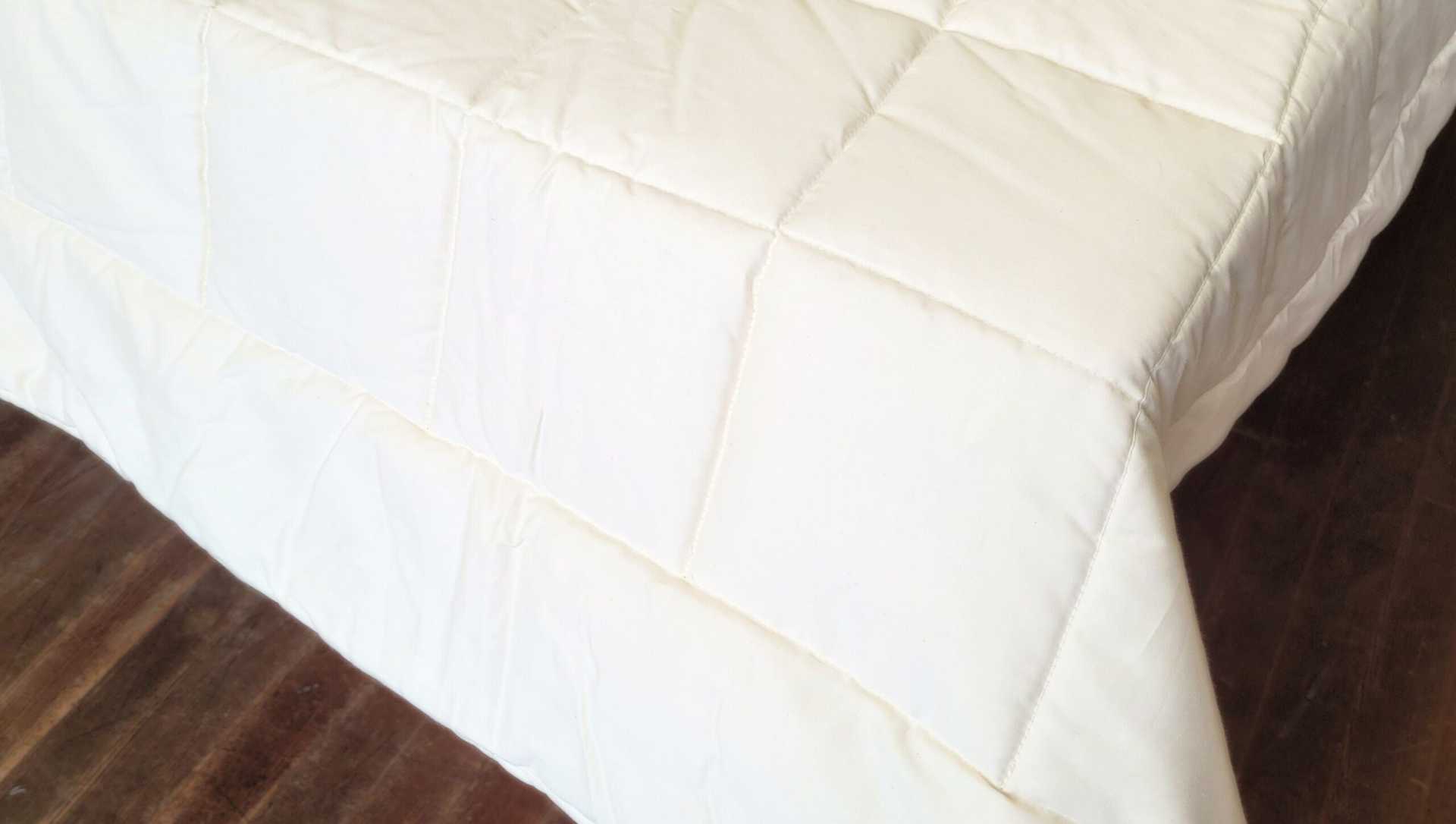
For a warm-room option, the Healthy Choice Lightweight Organic Wool Comforter is described as a lighter choice for warm climates and people who sleep warmer. Its listing specifies a wool fill of 150 grams per square metre, a GOTS-certified organic cotton sateen cover, and a three-year limited warranty. Those details make it possible to assess the construction and intended feel more concretely than a seasonal label alone.
A simple way to assess your room
Choosing comforter weight becomes easier when you assess the environment as carefully as the product. Start with the temperature you actually experience at bedtime and near morning. A room can cool overnight, and the comforter that feels perfect at 10 p.m. may feel different several hours later. If possible, use a room thermometer for a few days and keep a brief note of whether you wake warm, comfortable, or cold.
Then consider the bedding already in place. A mattress protector, fitted sheet, top sheet, blanket, and sleepwear each contribute to the overall warmth. When changing to a wool comforter, avoid changing every layer at once. Keeping the rest of the bed familiar makes it easier to understand what the new comforter is doing.
Finally, consider how much adjustment you want. Some people prefer one dependable comforter and a consistent bed-making routine. Others like to add or remove a blanket as conditions change. Neither approach is more correct; the best arrangement is the one that is comfortable and easy to maintain.
Why wool’s feel is distinct
Wool is valued in bedding for its resilience and its capacity to manage moisture. Rather than feeling slick or sharply cool, a wool-filled comforter often has a softly cushioned, dry hand. The fiber’s natural crimp gives it spring, helping filling retain loft when properly cared for. Wool can also buffer some moisture vapor, a quality that may contribute to a less clammy sensation for certain sleepers.
These characteristics should be understood as material properties, not medical promises. A wool comforter cannot guarantee uninterrupted sleep, eliminate allergens, or regulate every person’s body temperature. Individual sensitivities vary, and anyone with a known wool allergy or material concern should review product information carefully and consult a qualified health professional when needed.
The cover matters as much as the filling. Organic cotton, for example, can offer a soft, breathable surface, while the weave and quilting influence how the comforter drapes and how evenly the fill is held in place. Certifications may help clarify how fibers or processing are verified, but certification names should always be read in context. Check what a specific certification covers and whether it applies to the fill, the fabric, or the finished item.
Care begins with a cover
The simplest wool-comforter care habit is also among the most useful: use a removable duvet cover. It creates a washable barrier between the comforter and the everyday oils, dust, and accidental spills that bedding encounters. Choose a cover that fits the comforter properly, fasten its closures, and wash it according to its own label. A cover that is too loose may allow the insert to shift; one that is too tight can compress the filling and change the drape.
It is also helpful to make the bed in a way that lets moisture escape. Rather than immediately folding the comforter tightly beneath heavy layers, pull it back for a short period after waking and allow the bed to air. This modest habit helps refresh the bedding between washes and reduces the damp, enclosed feeling that can build up overnight.
Every comforter has its own care requirements, and wool products are not automatically machine washable. Many should not be immersed or laundered in a washing machine, because agitation and excess water can distort the fibers, compact the fill, or damage the construction. Follow the specific manufacturer’s instructions even if another wool item in your home has different care needs.
A seasonal airing ritual
Fresh air is a low-effort way to refresh wool bedding. Periodically remove the cover and air the comforter according to the maker’s guidance. A dry, well-ventilated space is preferable; avoid leaving wool in damp conditions, where it may retain moisture. Some manufacturers recommend airing outdoors, while others specify how to handle direct sunlight. Follow that advice rather than assuming that every wool comforter should be treated the same way.
For the Healthy Choice lightweight model, the care instructions recommend airing the comforter twice a year by hanging it outside in fresh air and placing it in direct sunlight. The same product guidance says not to wash the comforter and to spot-clean it if needed with a light soap and very little water, then air-dry it. That is product-specific advice, not a universal rule for every wool filling or cover.
Give the comforter space as it airs. Avoid draping it over a narrow rail that could strain the quilting or cause the fill to bunch. If hanging it is not practical, consult the maker for an appropriate alternative. Once refreshed, allow it to dry fully before returning it to the bed or placing it in storage.
Spot cleaning without overdoing it
When a small mark appears, act gently. First check the care label and any specific instructions supplied with the comforter. If spot cleaning is permitted, use only the recommended amount of mild soap and as little water as possible. Blot rather than scrub, working carefully to avoid spreading the mark or saturating the filling. Afterward, allow the area to dry completely in a well-ventilated place.
Do not assume that household stain removers, bleach, soaking, or vigorous brushing are safe for wool. Strong chemicals and rough handling may affect the fiber, dye, shell, or quilting. If a stain is large, persistent, or close to a seam, ask the manufacturer or a cleaner experienced with wool bedding for guidance. It is better to seek specific advice than to experiment on the comforter’s surface.
For routine freshness, avoid cleaning more often than necessary. A duvet cover and regular airing reduce the need for deep cleaning, while spot treatment can address small accidents. Always allow the comforter to become thoroughly dry before covering it again; trapped dampness is not desirable in any bedding.
Protecting loft and storing between seasons
Wool’s resilience is one of its pleasures, but no filling benefits from being compressed indefinitely. When storing a seasonal comforter, make sure it is clean and completely dry, then place it in a breathable storage bag or a clean cotton cover. Avoid sealing it away while damp or pressing it into a container so small that the fill remains crushed for months.
Choose a cool, dry place away from direct heat and persistent humidity. Check the maker’s storage instructions, especially if the comforter has a particular shell or quilting construction. When the season turns, take it out early enough to air and regain its natural drape before making the bed.
During everyday use, gentle handling is enough. Shake or fluff the comforter lightly to distribute the filling, taking care not to pull forcefully at seams. If the filling appears uneven, consult the care instructions before attempting to redistribute it. A little patience is preferable to aggressive shaking that could stress the stitching.
Questions to ask before choosing
Thoughtful bedding decisions often come down to asking precise questions. Rather than focusing solely on a product name or a broad claim about natural materials, look for clear information about construction, intended use, and maintenance.
- What does the maker mean by lightweight, medium, or warm?
- Is the fill weight or density provided, and can it be compared with other options from the same maker?
- What are the filling and shell made from, and do any sensitivities affect your choice?
- Which certifications apply to the materials, and what part of the product do they cover?
- Does the comforter require a cover, and what cleaning methods are specifically allowed?
- What climate or sleep preferences does the maker identify as a good fit?
- Is there a warranty, and what does it cover?
Reliable product information should help you understand what you are buying without promising that one textile will suit everyone. If key care details are missing, ask before purchase. A comforter that fits your room and your routine is more likely to remain a welcome part of the bed for years.
A calmer approach to seasonal bedding
There is no need to rebuild the bed every time the weather changes. A comforter of suitable weight can anchor the arrangement, while a removable cover, breathable sheets, and one extra blanket provide seasonal flexibility. In the hottest weeks, a lighter top layer may be enough. On cooler nights, adding a blanket can create warmth without replacing the comforter altogether.
That kind of adjustment is especially useful in homes where temperatures shift gradually. It also lets you learn what genuinely improves your comfort. If you wake overheated, remove a layer before deciding that the comforter itself is unsuitable. If you feel cold, examine the room and the other bedding before moving immediately to a much heavier option.
Over time, these small observations form a personal guide to comforter weight. The goal is not to follow a rigid seasonal formula, but to create a bed that feels composed and practical in your own home.
The lasting appeal of well-cared-for wool
A wool comforter can bring a distinct blend of loft, breathability, and natural texture to a bedroom. Choosing the right one means looking beyond the label: consider whether you sleep warm or cold, how your room behaves overnight, how much weight you enjoy, and whether the recommended care routine fits your habits.
From there, maintenance can remain refreshingly simple. Protect the comforter with a removable cover, air it periodically, spot-clean only as directed, and store it dry without prolonged compression. These are not elaborate rituals. They are practical gestures that respect the material and help preserve the comforter’s shape.
In a well-made bed, comfort is rarely one grand decision. It is the result of thoughtful layers, chosen with care and adjusted to suit real life. A wool comforter that feels right in your room—and receives the care its maker recommends—can make that everyday ritual a little more inviting, season after season.
A quick wool comforter care checklist
- Use a removable duvet cover and launder the cover according to its care label.
- Air the comforter periodically, following the manufacturer’s instructions for sunlight and ventilation.
- Spot-clean only when permitted, using the recommended method and minimal moisture.
- Do not machine-wash or soak a comforter unless its specific care instructions explicitly allow it.
- Dry thoroughly before returning it to the bed or storing it.
- Store between seasons in a clean, dry, breathable space without long-term compression.