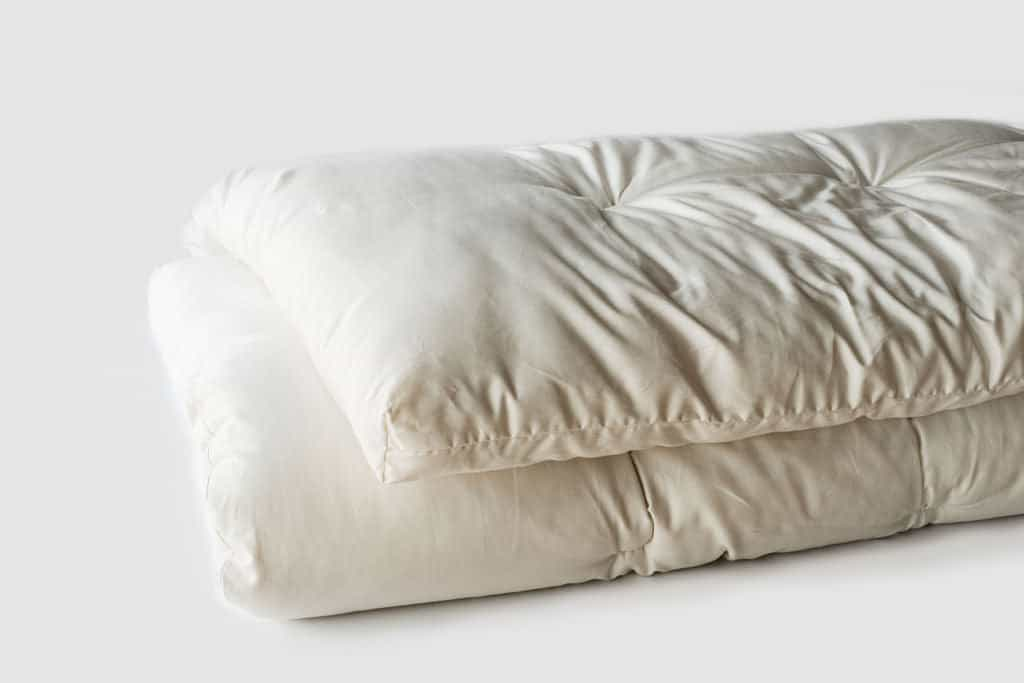
Pillows · Organic Bedding
Adjustable Pillow Fill: Comparing Wool and Latex Support
The right pillow is a matter of proportion: enough lift to support your head and neck, enough give to feel comfortable, and a construction that suits the way you sleep. Wool and shredded latex offer distinct routes to that balance, but “adjustable” can mean different things from one pillow to another.
Published November 7, 2026
There is a quiet luxury in a pillow that feels right before you have to think about it. Your head settles, your neck remains comfortably supported, and the surface neither pushes back too firmly nor disappears beneath your weight. Finding that equilibrium is not simply a question of softness. Loft, resilience, sleeping position, temperature, and the ability to change the fill all shape how a pillow feels night after night.
Wool and shredded latex are two natural-material options that invite comparison. Wool has a springy, airy quality and is valued for helping manage warmth and moisture. Latex is resilient and responsive, with a buoyant feel that can recover its shape after pressure. Both can be used in pillows, and some models allow the fill to be added or removed. Yet material alone does not tell the whole story: one wool pillow may have fixed layers, while another opens for adjustment; one shredded-latex pillow may be customizable, while another is sold at a set loft.
The most useful approach is to consider the exact construction rather than assume that every pillow made from a particular fiber behaves the same way. This guide looks at the feel, adjustability, care, and practical questions that can help you choose between wool and latex support.
What adjustable pillow fill actually means
An adjustable pillow has a design that lets you change its height, firmness, or both. Usually, this is done by opening a zippered inner chamber and removing or adding some of the fill. A modest change can make a meaningful difference: a pillow that initially feels too high may become more comfortable when some material is taken out, while a sleeper who wants more lift may be able to add fill back in.
Adjustability is not the same as softness. A soft pillow can have a fixed construction, and an adjustable pillow can still feel relatively resilient or substantial. It is also worth checking what the maker means by adjustable. Some products include loose fill that can be rearranged; others use layered batting or a fixed core that cannot be altered at home. A removable outer cover, on its own, does not mean that the pillow’s fill can be changed.
Before choosing, look for clear details about the inner chamber, how fill is accessed, whether extra material is included, and whether the manufacturer gives instructions for making changes. Consider whether you are comfortable handling loose fill. Adjusting a pillow can be a little untidy, particularly with small, lightweight pieces, so a wide work surface or a contained area can make the task easier.
Wool: soft resilience and breathable comfort
Wool fill has a cushioned, springy character that can feel gentle without being entirely flat. Wool fibers have a natural crimp, which helps create loft and a resilient surface. In a pillow, that can translate to a softly supportive sensation rather than the pronounced bounce some sleepers associate with latex.
Wool is also known for its ability to absorb and release moisture as conditions change. That quality can contribute to a comfortable sleep environment for people who prefer bedding that feels breathable and less clammy. Wool is insulating, too, but its performance depends on the full pillow construction, the room, the sleeper, and the cover fabric. It should not be treated as a guarantee that a pillow will feel cool or warm for everyone.
Wool pillows vary considerably. Some are made with a set quantity of wool batting and are not adjustable. Others have a zippered core with wool that can be removed or added to alter the loft. For example, the [Obasan Organic Wool Pillow](/products/obasan-organic-wool-pillow-481) is described as adjustable, with a zippered core that allows wool fill to be taken out or put back in. Its construction includes two different cotton surfaces, offering a choice of feel when the pillow is turned over.
By contrast, the [Healthy Choice Organic Wool Pillow](/products/healthy-choice-organic-wool-pillow-118) is described as a fixed-fill design rather than an adjustable one. It pairs GOTS-certified wool batting with an organic cotton sateen cover. That distinction is a useful reminder: choosing wool tells you something about the material, but not necessarily whether you can customize the pillow’s height.
Wool may suit sleepers who like a soft, buoyant cushion and appreciate natural fiber’s moisture-management qualities. It may be less appealing to someone who wants a dramatically responsive, spring-forward feel or expects to wash the whole pillow routinely. Care is often specific to the fill, and wool cores commonly call for airing and spot cleaning rather than machine washing.
Shredded latex: buoyant, responsive support
Latex has a distinctly springy response. Rather than compressing into a slow, enveloping softness, it tends to push back as pressure is applied and recover its shape. In shredded form, latex pieces can shift around one another, allowing the pillow to conform more readily than a single molded core. The result can feel supportive and lively, with a degree of cushioning that depends on fill quantity, cover, and construction.
Some shredded-latex pillows can be adjusted by removing or adding fill. The [Obasan Organic Latex Rubber Pillow](/products/obasan-organic-latex-rubber-pillow-480), for example, is described as having a zippered core with removable shredded fill. This gives sleepers a way to alter the pillow’s loft and firmness at home. Its two-sided cover also offers different fabric textures, so the surface feel can be changed by flipping the pillow.
Other latex pillows are sold with a set fill amount. The [Naturally Organic Hudson Shredded Latex Pillow](/products/naturally-organic-hudson-shredded-latex-pillow-326) features shredded Dunlop latex and an organic cotton cover, but its supplied product details say that it is not adjustable. That makes it especially important to distinguish “shredded” from “adjustable”: loose-looking fill does not automatically mean that a user can access or alter it.
Latex may appeal to sleepers who enjoy noticeable resilience and want a pillow that feels responsive when they move. Its spring can be comforting for people who dislike a pillow that feels overly yielding. On the other hand, the firmer, more buoyant sensation may not be everyone’s preference. As with any fill, the best way to judge it is to consider the pillow’s loft and firmness alongside your own comfort needs, return options, and the maker’s specifications.
Wool versus latex: the feel at a glance
| Consideration | Wool fill | Shredded latex fill |
|---|---|---|
| Typical feel | Soft, springy, and gently cushioned | Buoyant, responsive, and more distinctly resilient |
| Adjustability | Depends on the design; some zippered models allow fill changes, while others are fixed | Depends on the design; some have accessible fill, while others have a set construction |
| Temperature and moisture | Wool is naturally insulating and can absorb and release moisture | Feel depends on the latex, fill density, cover, and airflow through the pillow |
| Care pattern | Often airing and spot cleaning; check whether the core is washable | Care varies; some cores may be washable, while many pillows should only be spot cleaned |
| A useful question | Can the wool layers or fill be removed, or is the loft fixed? | Does the pillow have a user-accessible fill chamber, or is it a fixed-fill design? |
These are broad material tendencies, not guarantees. Product construction and care instructions should always take precedence.
Choosing loft for your sleep position
A pillow’s loft is its height when it is supporting your head. The right amount depends on your body, mattress, preferred sleeping position, and how much the pillow compresses under you. There is no single ideal measurement for every sleeper, and a pillow that feels comfortable in a shop may behave differently after several hours of use.
Side sleeping
Side sleepers often look for enough loft to fill the space between the shoulder and head without tilting the neck noticeably upward. The width of the shoulders and the softness of the mattress both affect that gap. An adjustable pillow can be useful if you need to fine-tune the height, but it is not a substitute for checking whether the overall shape and firmness feel right.
Back sleeping
Back sleepers may prefer a moderate loft that supports the natural curve of the neck without pushing the chin toward the chest. Too much height can feel restrictive; too little can leave the head feeling unsupported. A pillow that allows small adjustments may help, particularly if your comfort preferences change over time.
Stomach sleeping
Stomach sleepers often prefer a lower profile because a taller pillow can place the neck at an uncomfortable angle. A thinner pillow, or an adjustable design with some fill removed, may be worth considering. Comfort remains individual, so use your own experience rather than a label or sleep-position rule as the final test.
For people who change positions through the night, a medium or adjustable loft can provide flexibility. Still, customization is most valuable when the pillow’s material and construction already feel pleasant to you. Adjustability is a tool for refinement, not a guarantee of comfort.
How to adjust fill without guesswork
When you first try an adjustable pillow, avoid removing a large amount of fill at once. Make one small change, close the chamber securely, and sleep on the pillow for a few nights if possible. A single night may not be enough to tell whether a change is genuinely better, especially if you are adapting from a different pillow shape or material.
- Start with the pillow as supplied. This gives you a useful baseline for judging its original loft and support.
- Make gradual changes. Remove or add a small amount rather than transforming the fill level in one go.
- Keep removed fill. Store it in a clean, sealed bag if the maker’s instructions allow, so you can restore some or all of it later.
- Check alignment and comfort. Notice whether your neck feels comfortably supported and whether you wake with pressure or stiffness.
- Give each adjustment time. Keep other sleep conditions as consistent as you can while evaluating a change.
- Follow the product’s instructions. The fill may be messy to handle, and the manufacturer may specify how to open, close, or clean the inner core.
If you share a bed, make changes in a contained area and keep loose fill away from children and pets. Do not cut, puncture, or modify an inner chamber. If a zipper or seam appears damaged, stop using the pillow until you can confirm that it is safe and properly closed.
Care: airing, spot cleaning, and washing
Care requirements are not interchangeable between wool and latex, and they can differ even among pillows made from the same material. A removable pillowcase may be machine washable while the inner core is not. Read the care label before cleaning, and treat any product-specific instructions as the authority.
Wool pillows often benefit from periodic airing. This can help refresh the surface between uses, while a pillow protector and regular laundering of the outer case can reduce the need to clean the fill. Wool cores may call for spot cleaning only; soaking or machine washing can alter the fill, distort the construction, or make drying difficult. If a maker recommends occasional airing outdoors, follow its guidance about sun exposure rather than assuming that prolonged direct sunlight is appropriate.
Latex pillows also have varied care instructions. Some designs specify spot cleaning and advise keeping the pillow away from direct heat or sunlight. Others may allow a removable inner core to be washed, but only with particular precautions and thorough air drying. Never assume that every latex fill is washable because one model’s instructions permit it.
For either material, a washable pillowcase and protector can make everyday maintenance simpler. Let the pillow dry completely after any approved cleaning, and avoid storing it while damp. Lingering moisture can affect comfort and freshness, regardless of the fill. If an odor persists after following the product’s care instructions, contact the maker rather than applying solvents, fragrance, or aggressive cleaning products that could damage the materials.
Organic labels and material transparency
When “organic” is part of your bedding search, look beyond the name of the product. Check which component is certified: the fill, the fabric, or both. Certifications such as GOTS for organic textiles and GOLS for organic latex relate to defined standards and supply-chain requirements, but the exact scope depends on the product and certification details. A clear description should identify materials, construction, care, and any relevant certification claims.
It is also useful to separate material origin from finished-product performance. An organic or natural material does not automatically make a pillow suitable for every sleeper, nor does it mean that the item requires no maintenance. Loft, shape, cover fabric, durability, and the ability to clean the product remain practical considerations.
For readers comparing organic bedding, precise language is more informative than broad promises. Look for the fiber composition, whether the fill is fixed or adjustable, and whether the pillow’s care instructions are easy to find. When a product description is unclear about what can be removed or washed, ask the seller before purchasing.
Which pillow may suit you?
Wool may be a good place to start if you prefer a soft, gently springy feel and want a fill known for moisture management. If custom loft matters, make sure the specific wool pillow has an accessible, adjustable chamber; some wool designs are fixed. The Obasan Organic Wool Pillow is one example of a wool option described as adjustable, while the Healthy Choice Organic Wool Pillow is described as non-adjustable.
Shredded latex may be worth considering if you like a buoyant response and want support that feels more spring-forward. If customization is important, verify that the fill can actually be changed. The Obasan Organic Latex Rubber Pillow is described as adjustable, while the Naturally Organic Hudson Shredded Latex Pillow is listed as non-adjustable. Those differences are more useful than assuming that every latex pillow offers the same experience.
Neither material is universally better. A soft, breathable wool pillow can feel reassuring to one person and too yielding to another; latex’s responsive support can feel lively to one sleeper and overly firm to the next. Prioritize the sensation you enjoy, the support you need, and the care routine you are prepared to follow.
A practical checklist before you decide
- Is the fill adjustable, or is the pillow fixed at its supplied loft?
- If adjustable, can you add and remove fill easily, and is the chamber designed to be opened at home?
- Does the material feel appealing to you: softly resilient wool or more buoyant shredded latex?
- Will the pillow’s height suit your sleeping position, shoulder width, mattress, and preferred neck support?
- Are the inner fill and outer cover both described clearly?
- Can you follow the care instructions, including any limits on washing, heat, or direct sun?
- Does the seller explain certification claims and product construction in specific terms?
- Are returns or exchanges available if the feel is not right after a reasonable trial?
The final word on wool and latex support
Choosing an adjustable pillow is less about finding a universal winner than about finding a pillow whose character fits your preferences. Wool offers a soft, springy cushion and a natural ability to manage moisture; shredded latex brings buoyant, responsive support. Either material may be fixed or adjustable, and care depends on the details of the individual design.
Begin with the feel you like, then investigate the construction. Confirm that the fill can be changed if customization matters, and take care instructions seriously. A thoughtfully chosen pillow should support your rest without demanding a complicated routine. With a little attention to loft, material, and maintenance, the comparison becomes less abstract—and the ideal pillow becomes much easier to recognize.